Beverage Co-Packer Scheduling: Why Clarification Decisions Belong Before the Run Calendar Is Locked
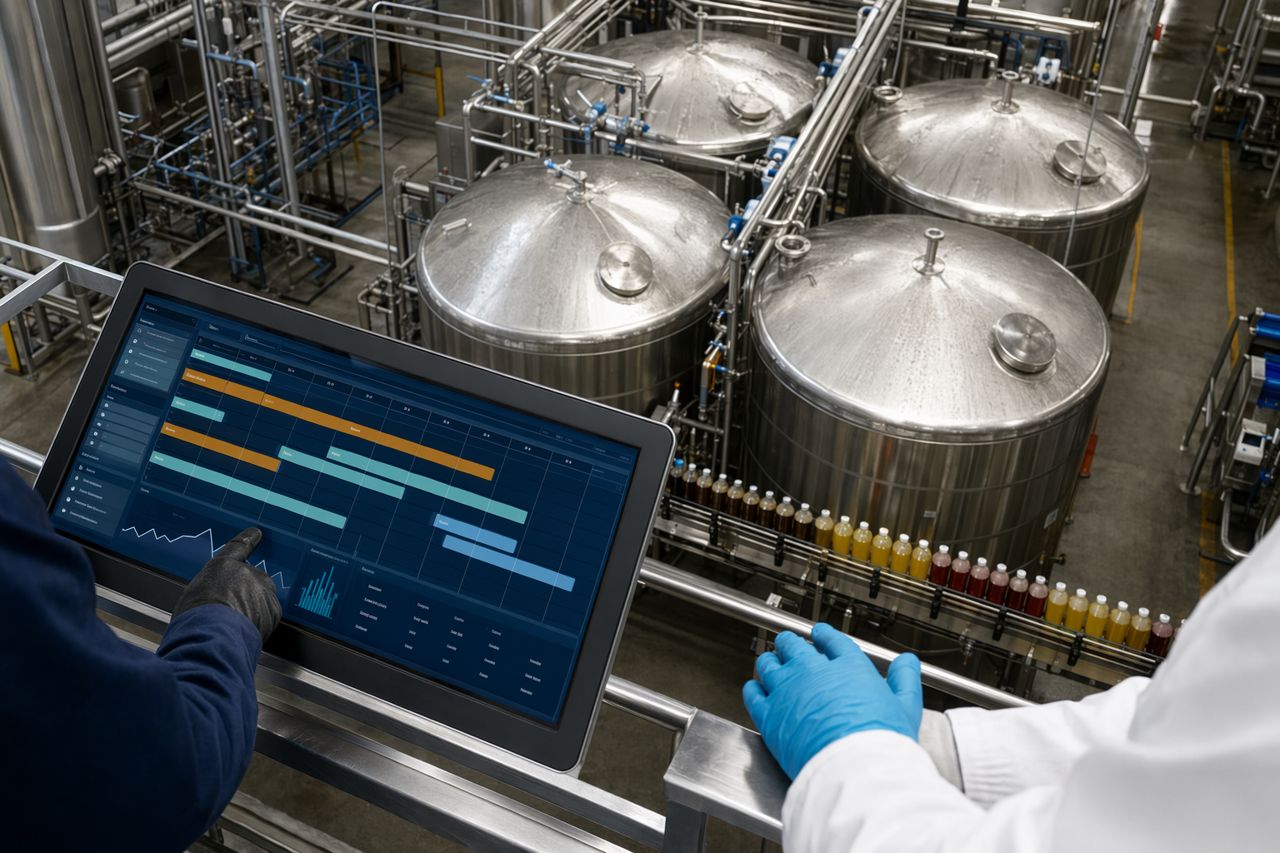
A co-packer schedule is not just a calendar. It is a promise to customers, procurement, QA, sanitation, warehouse, maintenance, and the line crew.
When clarification chemistry is left undecided until a beverage run is already slotted, that promise gets exposed. Tank hold time stretches. Filters load early. The production team improvises. QA waits on haze checks. A changeover that looked clean on the schedule becomes a moving target.
For beverage co-packers managing teas, juice blends, botanical drinks, functional beverages, concentrates, and multi-SKU campaigns, enzyme clarification belongs upstream of the run calendar—not inside the shift scramble.
Enzyone is an enzyme supplier for beverage co-packers that need practical process support around clarification, viscosity management, filtration relief, and documentation-ready trials.
The calendar hides clarification risk until the line feels it
On paper, a run may look simple:
- Receive blend base
- Batch and adjust
- Clarify or polish
- Filter
- Fill
- CIP
- Change over
In the plant, the sequence is less forgiving. Clarification behavior affects tank availability, filtration rate, pre-filter life, finished beverage appearance, and release timing. If the enzyme decision is unresolved, the schedule is carrying an invisible variable.
That variable usually shows up as one of four problems:
- A tank that stays occupied longer than planned because clarification response was slower than expected.
- A filtration step that becomes the bottleneck because suspended solids, pectin load, starch haze, or cell-wall material were not reduced early enough.
- A quality hold that blocks shipment because haze, sediment, or visual stability questions remain after filling plans are already committed.
- A changeover window that collapses because the next SKU is waiting while the prior batch still needs rework, recirculation, or additional filtration passes.
The damage is rarely dramatic in one single moment. It is death by schedule compression.
Clarification is a scheduling decision, not just a formulation decision
Brand owners often think of clarification as a product attribute: clear, cloudy, pulpy, bright, stable, natural-looking, lightly opaque.
Co-packers have to translate that attribute into operating behavior:
- How long will the batch sit before filtration?
- Which tank is tied up?
- Which filter train is exposed?
- Can the product hit the planned filler window?
- Is the next SKU protected from delay?
- What documentation is needed before production approval?
That is why enzyme selection and trial design should happen before the production calendar is frozen. The right enzyme program is not only about achieving visual clarity. It is about creating a predictable path through batching, hold, filtration, filling, and changeover.
Where late enzyme decisions disrupt co-packer operations
1. Tank behavior becomes uncertain
A beverage co-packer lives and dies by tank discipline. If a tea extract, juice blend, botanical infusion, or functional base does not clarify predictably, it can occupy stainless longer than planned.
Late enzyme decisions make it harder to answer basic scheduling questions:
- Will the product be ready for filtration on the planned shift?
- Does it need additional rest time before polishing?
- Will solids settle, remain suspended, or blind the filter?
- Can the batch be moved without creating new haze?
When tank behavior is unknown, planners add buffer. Buffer protects the shift, but it reduces usable capacity.
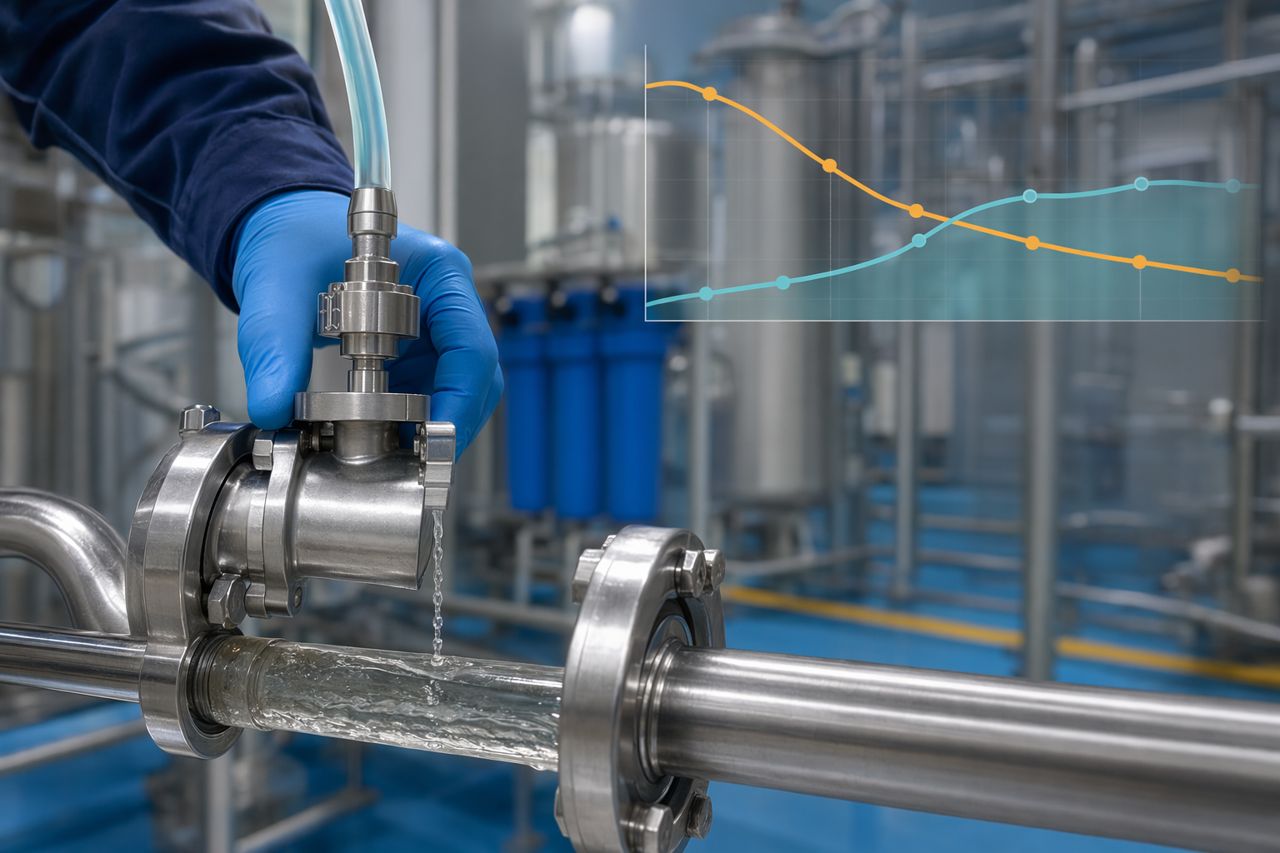
2. Filtration relief is not built into the run plan
Filtration is often where unresolved clarification shows up first. The filler may be ready. Packaging may be staged. Operators may be staffed. But the product is moving through the filter slower than the calendar assumed.
A planned enzyme approach can reduce the load reaching filtration by breaking down haze-forming or viscosity-building components before they hit the filter train. For co-packers, the value is straightforward:
- Less surprise filter loading
- More predictable polish filtration
- Reduced pressure on changeover timing
- Fewer emergency adjustments during the run
- Better alignment between batching and filling
Filtration relief should not be treated as a lucky outcome. It should be designed into the run plan.
3. Viscosity affects more than mouthfeel
Viscosity is not only a sensory issue. In a co-packing environment, it affects pumping, transfer time, heat exchange, filtration, filler behavior, and residue load during cleaning.
For multi-SKU beverage facilities, even modest viscosity differences can change the rhythm of the day. A thicker blend may move slower from batching to filtration. A botanical or fruit-containing SKU may carry suspended material into the filter. A functional beverage base may behave differently after ingredient addition than it did in a lab sample.
Enzyme planning helps convert viscosity from a production surprise into a controlled variable.
4. QA gets asked to approve what operations had no time to stabilize
If enzyme clarification is handled late, QA can inherit an unstable situation:
- Haze trend not established
- Sediment risk not characterized
- Hold condition not agreed
- Rework path unclear
- Customer approval sample not representative of production timing
This is not a QA failure. It is a scheduling failure.
A documentation-ready enzyme trial gives QA and operations a shared basis for approval before the production slot becomes expensive.
The better sequence: decide before the calendar locks
For co-packers, the most efficient clarification process is not complicated. It is disciplined.
Step 1: Identify the operational risk by SKU type
Different beverage categories create different plant-floor problems.
- Tea and botanical beverages: haze, fine suspended material, extract variability, sediment questions
- Juice and juice blends: pectin-related viscosity, cloud control, filtration load, pulp behavior
- Functional drinks: ingredient interactions, visual stability, protein or fiber system sensitivity, mineral haze
- Concentrates and bases: high-solids handling, transfer behavior, dilution response, downstream filtration pressure
Before scheduling, map the likely process risk. Do not wait for the first plant trial to discover it.
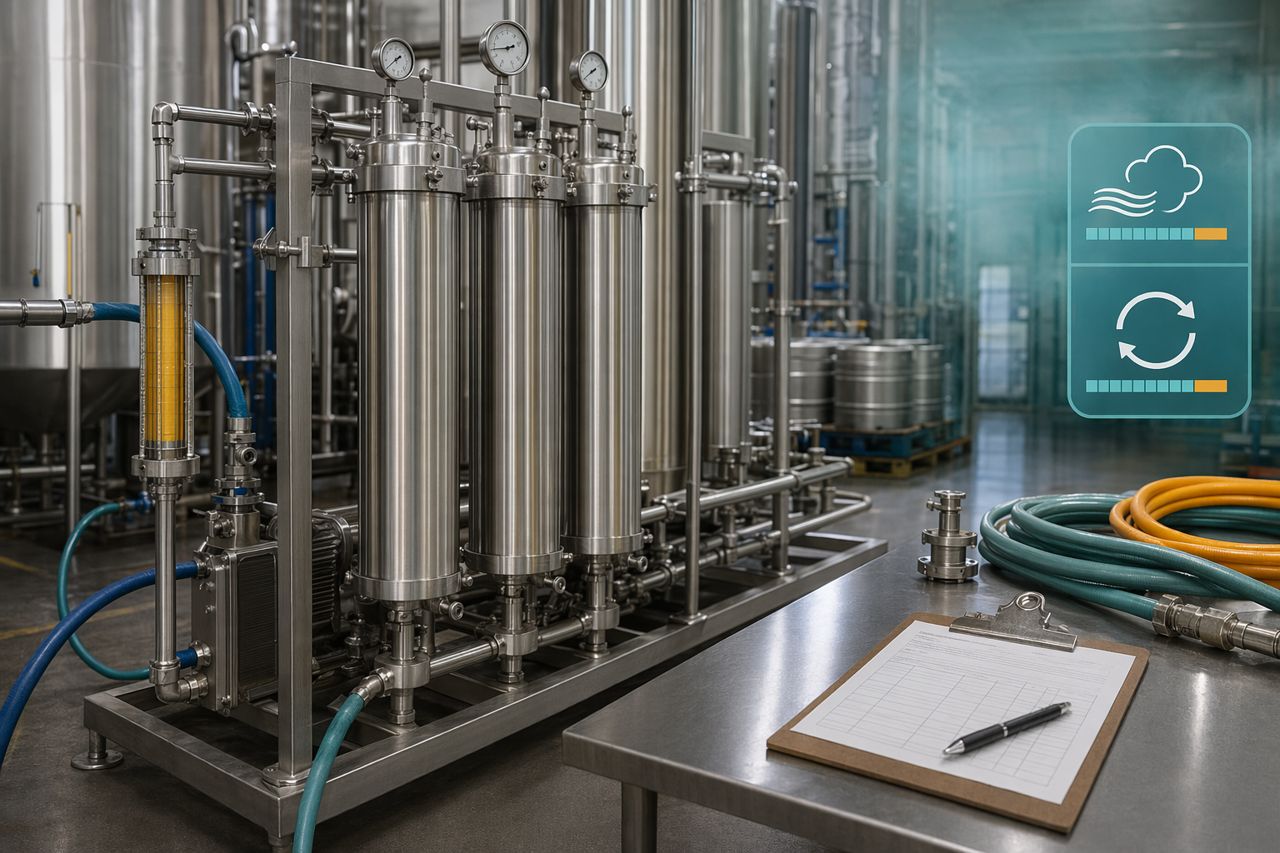
Step 2: Run a focused clarification trial
A useful trial for a co-packer is not an academic exercise. It should answer production questions:
- Does the beverage clarify within the required production window?
- Does viscosity move in the right direction for pumping and filtration?
- Does the treated batch filter more predictably?
- Does the visual target match the customer brief?
- Does the result hold under the expected process conditions?
- Can the plant document the decision clearly?
The goal is not to create a perfect lab story. The goal is to reduce calendar risk.
Step 3: Define the production decision points
Before the run is locked, the team should agree on:
- Enzyme addition point
- Mixing expectation
- Hold window
- Temperature band appropriate for the product and process
- Filtration readiness criteria
- Visual check expectations
- Escalation path if the batch does not behave as expected
These decision points keep the line from depending on shift-by-shift interpretation.
Step 4: Protect the changeover
A clarification decision should support the next SKU, not only the current one.
If the first beverage in a campaign delays filtration, the next beverage inherits the disruption. That may affect labor, packaging staging, warehouse traffic, customer pickup, and CIP timing.
For co-packers running short campaigns and frequent SKU changes, clarification planning is changeover protection.
What plant managers should ask before approving the schedule
Before a beverage run is committed, plant leadership should be able to answer these questions:
- Has the enzyme approach been selected for this beverage matrix?
- Has the trial reflected the real process sequence, not only the benchtop target?
- Do batching, QA, and filtration agree on readiness signals?
- Is tank time realistic?
- Is the filter train protected from avoidable loading?
- Does the plan support the next SKU on the calendar?
- Is documentation ready for customer review or internal approval?
If the answer is no, the schedule is not actually locked. It is only optimistic.
How Enzyone supports co-packer clarification planning
Enzyone works with beverage co-packers that need enzyme decisions tied to production reality. We support clarification and viscosity-management planning for multi-SKU beverage operations where uptime, documentation, and predictable trials matter.
Our role is practical:
- Match enzyme options to beverage matrix and operational target
- Support trial structure before the production slot is committed
- Help define process checkpoints that operations can use
- Focus on filtration relief, haze control, viscosity behavior, and tank predictability
- Provide documentation support suitable for B2B review
We do not sell vague biotech promises. We help co-packers make enzyme decisions that fit the line.
The takeaway
Clarification decisions made after scheduling create avoidable risk. Clarification decisions made before scheduling create operating control.
For a beverage co-packer, the right enzyme plan can protect tank availability, reduce filtration surprises, support QA confidence, and keep SKU changeovers closer to the calendar.
If you are planning a beverage run and want enzyme clarification evaluated before the schedule locks, use the on-site request form to start a quote conversation.