Filtration Media Selection for Multi-Beverage Plants: Questions Before You Blame the Filter
In a contract beverage co-packing plant, filtration problems rarely arrive as a neat media problem.
They show up as a slow polish step, rising differential pressure, short filter life, hazy retain samples, sticky changeovers, and operators asking whether the cartridge, sheet, bag, or membrane is wrong for the SKU.
Sometimes the media is wrong. Often, the liquid reaching the filter is not under control.
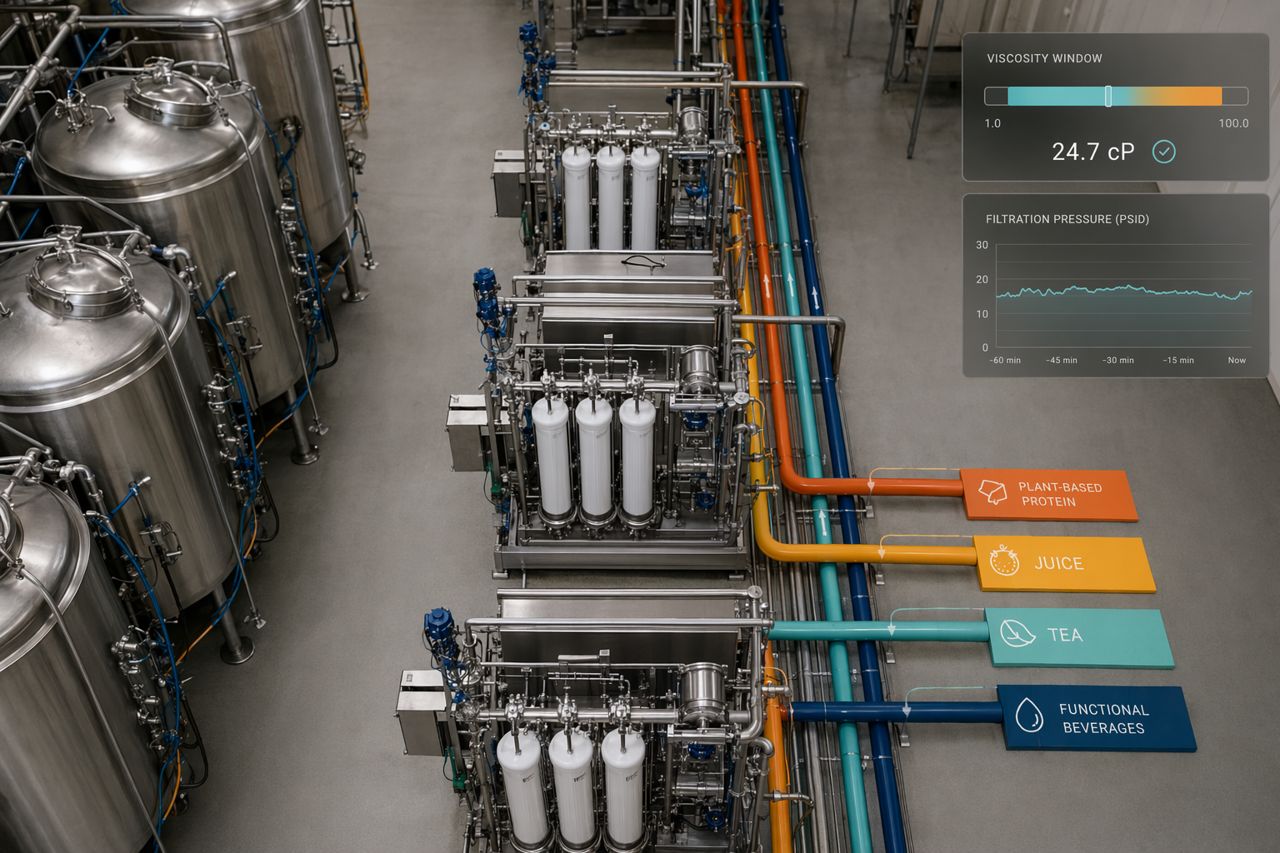
For a multi-SKU operation running teas, juice blends, functional beverages, concentrates, botanicals, sweetened bases, dairy-adjacent formats, or fermented inputs, filtration media selection has to start upstream: tank behavior, solids character, viscosity, temperature, hold time, and the way each product family responds to enzyme treatment.
Enzyone is an enzyme supplier for beverage co-packers that need filtration relief without vague lab promises. We help plant teams connect enzyme trials to run conditions, changeover discipline, and quote-ready supply planning.
The filter may be taking the blame for upstream variation
A filter only sees what the process sends it.
If a beverage base contains compressible fruit solids, tea fines, swollen gums, pectin-rich pulp, starch carryover, protein haze precursors, or botanical particles that keep changing size under hold conditions, the media can foul fast even when the nominal rating looks reasonable.
Before changing media, ask:
- Did viscosity shift between batching and filtration?
- Did the product sit warm longer than planned?
- Did the previous SKU leave a residue risk that changed tank behavior?
- Was the incoming concentrate consistent with prior lots?
- Did the product require extra agitation to stay uniform?
- Did haze develop after filtration, or was it already forming upstream?
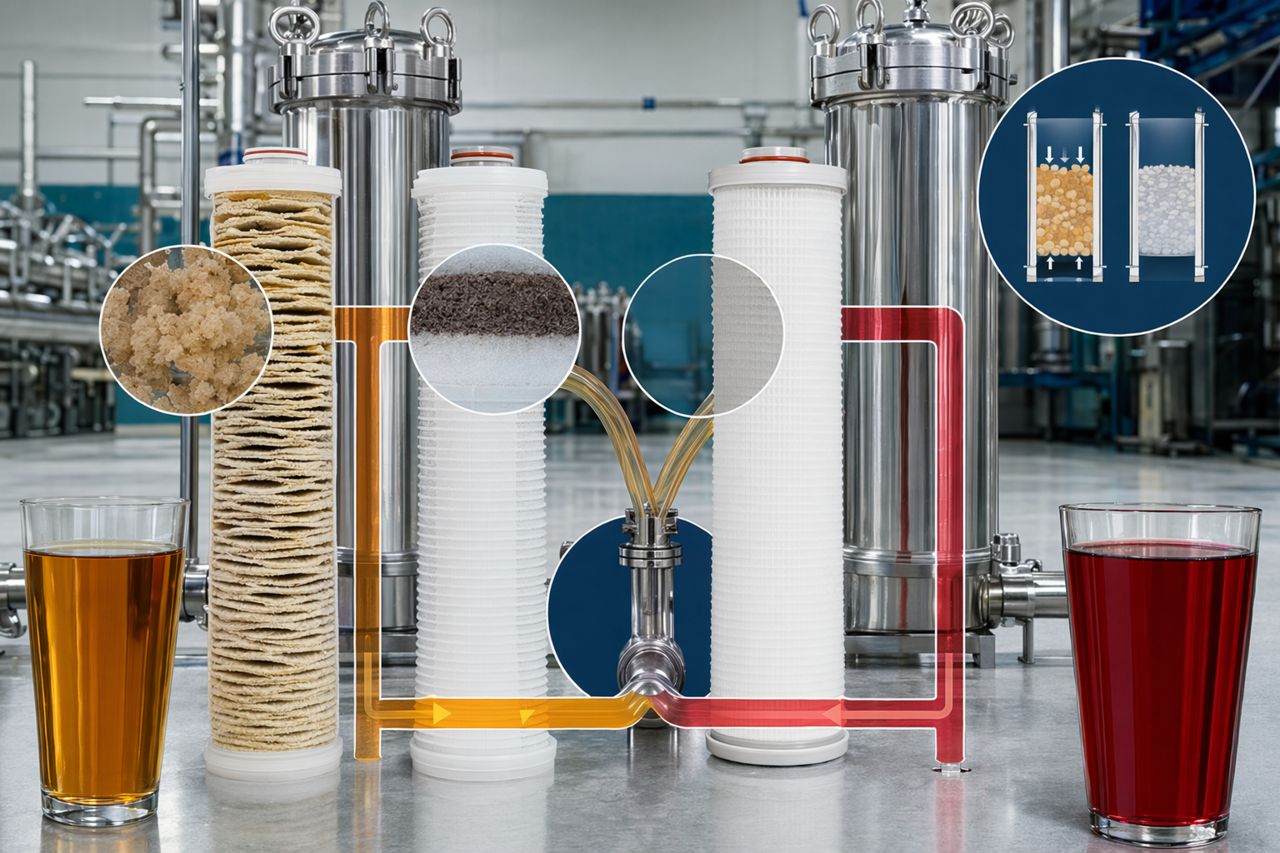
- Is the filter plugging with deformable solids or hard particulates?
Those answers determine whether the fix is media, pretreatment, enzyme selection, processing discipline, or a combination.
The media decision starts with product family, not just micron rating
Micron rating matters, but it is not the whole filtration plan. Multi-beverage plants need a decision path that reflects what the SKU is trying to do on the floor.
Clarified teas and botanical drinks
These often bring fine suspended material, color sensitivity, and haze risk. A filter may polish the appearance for release, but if haze precursors remain active, the same product can drift in storage.
Questions to ask before changing media:
- Are tea fines loading the filter early in the run?
- Is haze forming after heat exposure or cold storage?
- Are botanical extracts contributing gums or insoluble fines?
- Is the target appearance bright, lightly opalescent, or intentionally cloudy?
The enzyme angle is usually about reducing problematic soluble or colloidal contributors before the filter becomes the control point.
Juice blends and fruit-forward beverages
Fruit systems can look stable in the mix tank and still punish filtration. Pectin, pulp fines, suspended solids, and viscosity shifts can create a filter cake that blinds quickly.
Before blaming media, confirm:
- Whether viscosity is within the expected process window
- Whether pulp or puree lots are changing run-to-run behavior
- Whether temperature and hold time are consistent
- Whether the filter cake is soft, sticky, or compressible
- Whether clarification targets match the consumer expectation for the product
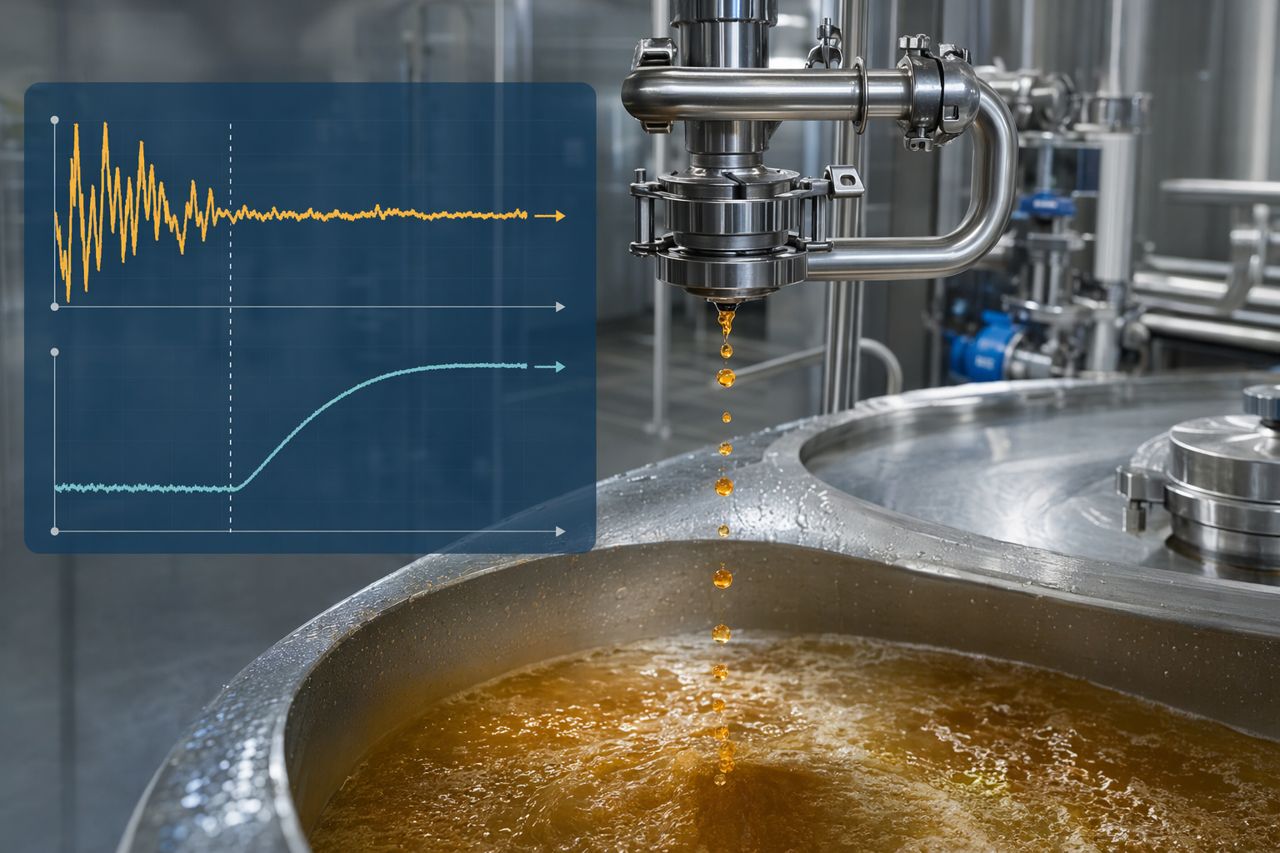
In these cases, enzyme treatment can help make filtration behavior more predictable by reducing viscosity drivers and improving solids handling before filtration.
Functional beverages and multi-ingredient blends
Functional drinks often combine acids, minerals, proteins, fibers, flavors, botanical extracts, sweeteners, and stabilizers. Each addition can change particle behavior.
A media swap may solve one SKU and create trouble on the next.
Ask:
- Which ingredient addition causes the first visible change in turbidity or flow?
- Are stabilizers or fibers designed to remain in suspension?
- Are there protein or mineral interactions that worsen under heat or pH movement?
- Does the product need clarification, rough filtration, or protection from visible sediment only?
The plant needs a filtration strategy that respects the label design, not just the filter housing.
Signs your media is being used as process insurance
When the same plant runs many beverages, operators may compensate for weak upstream control by over-filtering. That can protect release in the short term, but it also adds cost, labor, waste, and downtime.
Watch for these patterns:
- Frequent media changes on specific product families
- Operators slowing the pump to keep filtration alive
- Repeated differential pressure spikes after the first portion of a run
- Haze failures after a product looked acceptable at filling
- Filter housings opened more often than the batch record suggests
- Product losses during restart, recirculation, or media swap-out
- Changeover windows expanding because filtration is unpredictable
If these issues repeat, the filter is no longer just a separation device. It is absorbing variability that should be managed upstream.
Practical trial questions before you resize equipment
Before buying different media, adding housings, or changing line layout, run a controlled plant-relevant trial.
A useful trial should answer practical operating questions:
- Which product families actually need enzyme pretreatment?
- What tank conditions produce the best filtration behavior?
- How long can the product hold before viscosity or haze risk changes?
- Does enzyme treatment reduce filter change frequency?
- Does the treated batch maintain the intended appearance and mouthfeel?
- Can the process fit normal batching and changeover timing?
- Can operators document the step without adding confusion?
A trial that cannot survive plant conditions is not a solution. It is a lab note.
Match enzyme work to the filtration objective
The enzyme plan should be selected around the operational pain point.
If the issue is slow flow
Look at viscosity, soluble solids behavior, pectin contribution, gum load, and the way the product responds to hold temperature. The goal is not to over-process the beverage. The goal is to move it through the filter within a repeatable window.
If the issue is short media life
Look at compressible solids, deformable particles, pulp fines, and colloidal load. Media can blind quickly when the filter cake collapses instead of building a stable porous layer.
If the issue is haze control
Look beyond the filter rating. Haze may come from precursors that pass through filtration and develop later. Product family, pH, heat history, ingredient sequence, and storage conditions all matter.
If the issue is changeover pressure
Look at whether certain SKUs regularly push the line off schedule. In co-packing, a filtration issue is also a scheduling issue. A reliable enzyme step can help keep the next product from inheriting lost time.
Documentation matters as much as chemistry
A co-packer does not just need a product that works. The plant needs documentation that supports quoting, batching, operator training, and customer discussions.
For enzyme-supported filtration trials, build documentation around:
- Product family and SKU name
- Ingredient risk points
- Batch size and tank path
- Temperature window
- Hold time before filtration
- Filtration media type
- Flow observations
- Differential pressure trend
- Clarity or haze observations
- Filter change frequency
- Changeover impact
- Operator notes
This creates a record that can be used for customer alignment, internal costing, and repeat production.
When to change the filter, and when to change the liquid
Change the media when:
- The target separation is wrong for the media type
- The filter rating does not match the required appearance or protection goal
- Housing capacity is undersized for the solids load
- The media is chemically or physically mismatched to the beverage
Change the liquid before filtration when:
- Viscosity is driving slow flow
- Pectin, gums, starches, or plant solids are overloading the media
- Haze precursors are moving through the filter and appearing later
- Filter life swings widely between lots of the same SKU
- Changeover schedules are being disrupted by predictable product families
The strongest answer is often both: media selection aligned with upstream enzyme control.
What Enzyone brings to the discussion
Enzyone helps contract beverage co-packers turn filtration complaints into controlled enzyme trials and supply decisions.
We focus on:
- Beverage-family enzyme selection
- Trial plans that fit real batching windows
- Filtration relief tied to plant observations
- Viscosity and haze-control support
- Changeover-aware recommendations
- Documentation your team can actually use
- Quote-ready supply conversations for repeat production
No generic biotech theater. No disconnected lab language. Just a practical path from tank behavior to line performance.
Request a quote for beverage filtration support
If your plant is changing media too often, losing time to slow polish filtration, or managing haze risk across too many beverage types, bring us the run history.
Tell us the product family, filtration setup, pain point, and production target. We will help identify whether the filter needs a new media strategy, the beverage needs enzyme pretreatment, or the process needs a tighter trial plan.
Request a quote from Enzyone for enzyme support in multi-beverage filtration.