How Short Production Runs Change Clarification Strategy in Beverage Co-Packing
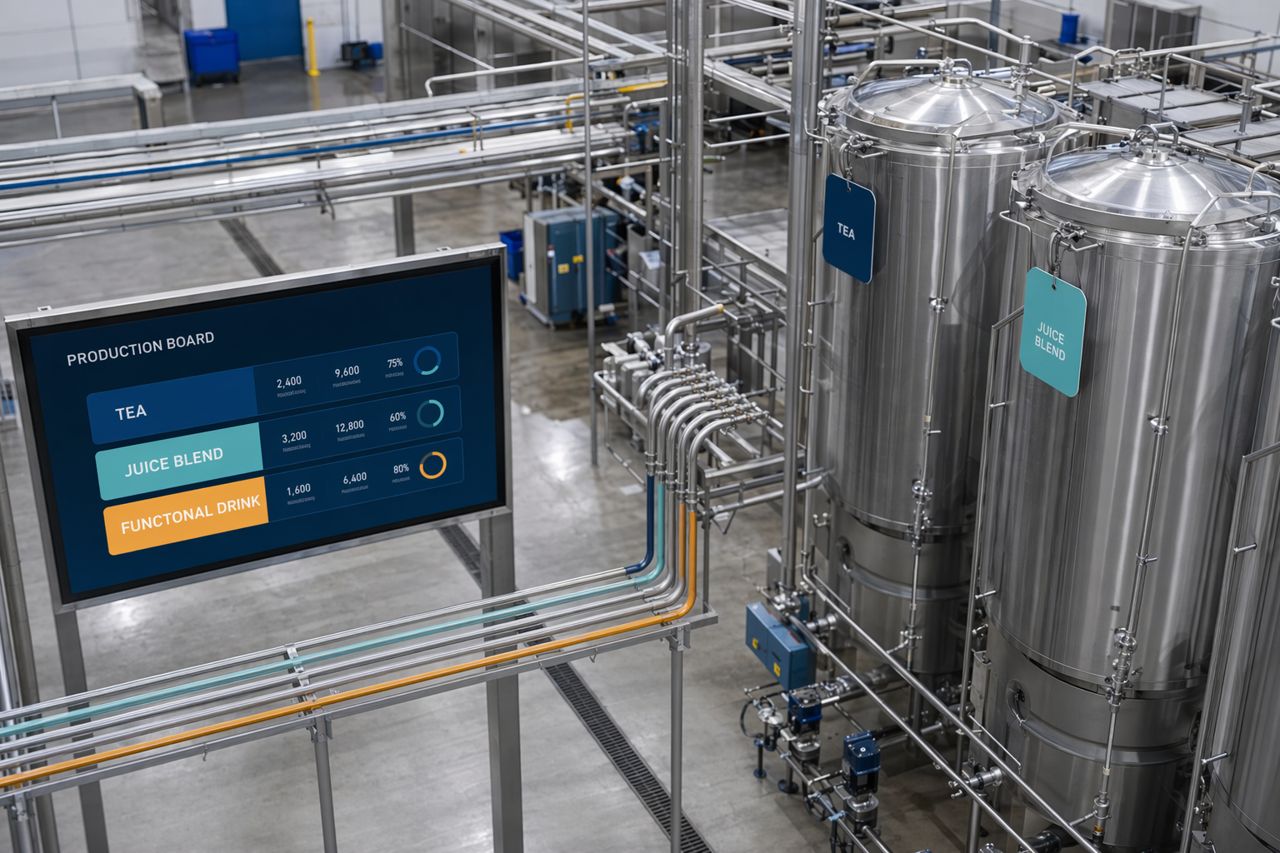
Short production runs are now normal for many beverage co-packers. Tea, juice blends, functional drinks, botanical beverages, coffee bases, and seasonal SKUs may all move through the same tanks, transfer lines, filters, and fillers in a tight production window.
That operating model changes how clarification should be planned.
For a dedicated beverage plant, clarification can be optimized around a narrow product family. For a contract beverage co-packer, the real requirement is different: predictable tank behavior across many formulas, faster decision-making during trials, fewer surprises at filtration, and documentation that travels cleanly from SKU to SKU.
That is where the right enzyme supplier for beverage co-packers should be useful. Not as a generic ingredient vendor, but as a process partner that understands uptime, changeover discipline, haze risk, viscosity swings, filter loading, and batch release pressure.
Why short runs make clarification harder
A long campaign gives the production team time to stabilize a process. Short runs do not.
In a co-packing environment, the clarification window may be squeezed between batching, hold-time limits, filtration availability, packaging line readiness, and the next scheduled changeover. If a beverage behaves differently than expected, the delay does not stay isolated. It can affect downstream filtration, filler start time, sanitation timing, and labor planning.
Common short-run clarification problems include:
- Slow or inconsistent settling in blend tanks
- Unexpected haze after heat exposure or cold storage
- High viscosity that drags down transfer and filtration
- Filter plugging early in the run
- Inconsistent appearance between trial batches and production batches
- Extra hold time that disrupts packaging schedules
- Rework decisions made without enough process data
- Documentation gaps when a brand owner asks what changed
The technical issue may look like haze or flow restriction. The business issue is schedule reliability.
Short runs reduce your margin for trial-and-error
Many beverage formulas can be clarified with enzyme support, but short runs punish loose trial design. If the first production attempt becomes the real test, the plant carries the risk.
A stronger approach is to separate three questions before the production slot is at stake:
- What is driving haze, viscosity, or filter loading in this formula?
- What enzyme approach is most likely to create a stable, filterable beverage without overcomplicating the process?
- What batch instructions will operators actually follow under changeover pressure?
For co-packers, the best clarification strategy is not always the most aggressive one. It is the one that fits the tank schedule, works within the existing process path, and produces repeatable results with clean batch records.
What changes when SKUs rotate fast
1. Enzyme selection must account for SKU variability
A co-packer may run beverages with very different raw material behavior: fruit particulates, pectin-rich bases, tea polyphenols, botanical extracts, plant-derived solids, sweetener systems, stabilizers, and acid profiles.
That means enzyme selection should not be handled as a one-formula assumption. It should be mapped against the beverage family and the actual plant constraints:
- Is the goal haze reduction, viscosity management, filtration relief, or all three?
- Does the formula include fruit, tea, botanicals, or blended functional components?
- Where is the practical treatment point in the process?
- How much tank time is available before filtration or filling?
- What product attributes must remain unchanged?
- What documentation does the brand owner require?
The supplier should help the plant define a controlled starting point, not hand over a vague recommendation and leave production to troubleshoot the rest.
2. Clarification has to respect changeover discipline
In short-run beverage co-packing, every added step competes with sanitation, allergen controls where relevant, flavor changeovers, packaging swaps, and line clearance.
A clarification plan should fit the plant’s existing rhythm. That means clear instructions for:
- Addition point
- Mixing sequence
- Hold conditions
- Filter readiness checks
- Expected tank behavior
- Escalation steps if the batch does not respond as planned
- Documentation required for the production record
If the process depends on tribal knowledge from one operator, it is not robust enough for multi-SKU production.
3. Filtration relief must be planned upstream
Many co-packers discover clarification problems at the filter. By then, the team is already paying for the upstream decision.
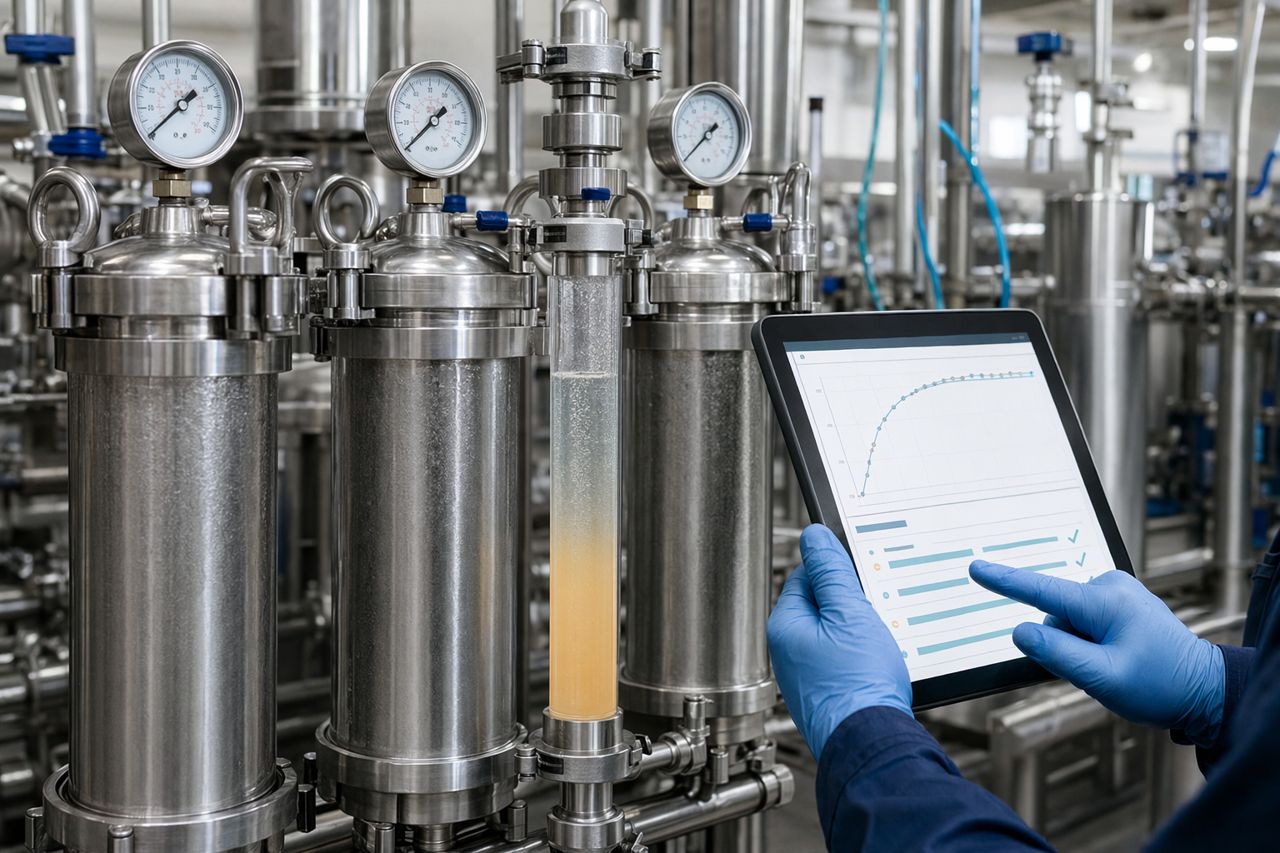
When soluble and suspended materials are not managed before filtration, the filter can become the bottleneck. The symptoms are familiar: early pressure rise, shorter filter life, reduced flow, longer downtime, and more operator intervention.
A better enzyme strategy starts earlier. The goal is to reduce the load that reaches the filter while preserving the beverage profile the brand owner approved.
That does not mean every beverage needs the same treatment. It means each formula should be assigned a clarification logic before it reaches production: what needs to be broken down, what needs to remain stable, and what filter behavior should be expected.
4. Haze control has to survive real distribution conditions
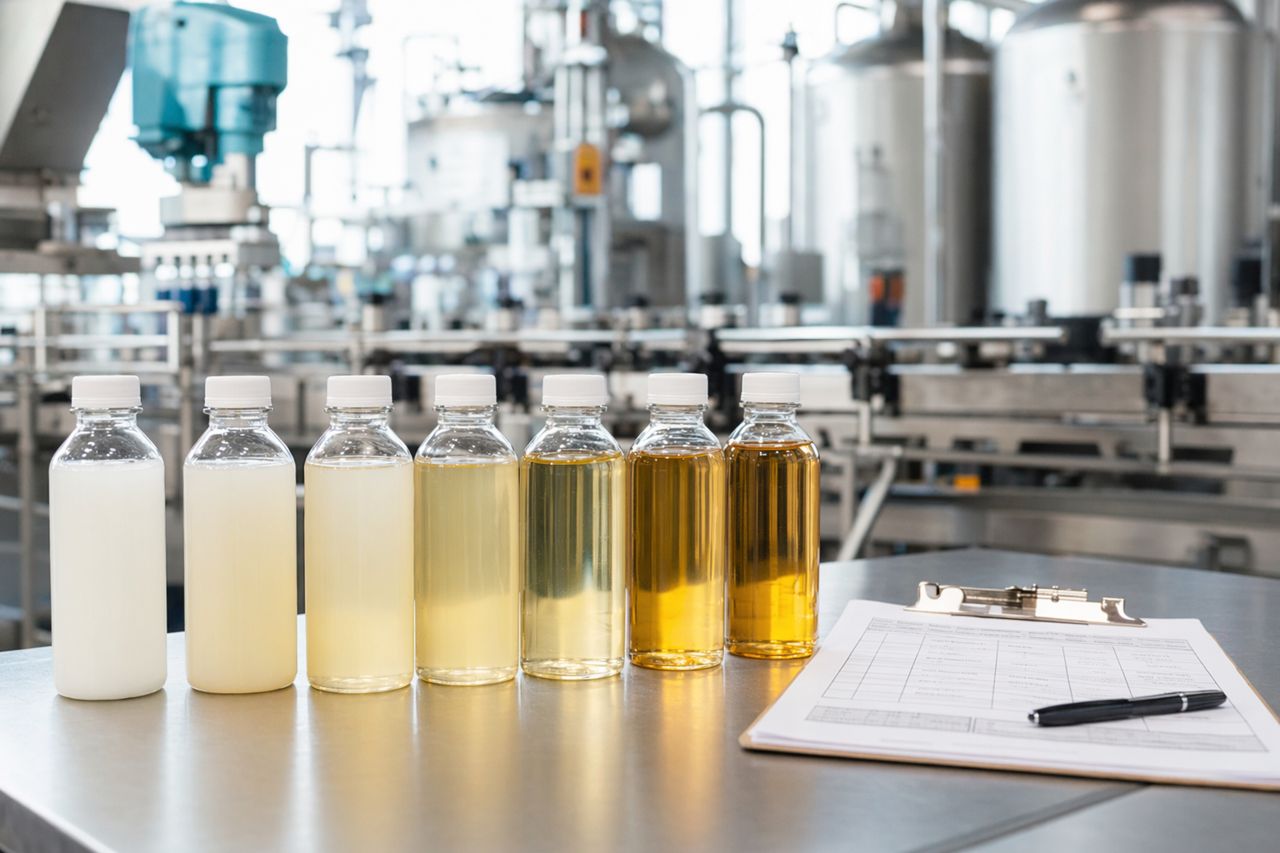
A beverage may look acceptable coming out of the tank but show haze later after storage, temperature cycling, or ingredient interaction. For co-packers, delayed haze can become a customer service issue, a rework discussion, or a future scheduling problem.
Short runs make this more difficult because there may be limited inventory from each SKU and less time for extended observation before shipment.
A practical haze-control plan should include:
- Formula-specific risk review
- Small-scale screening before production
- Visual and process checkpoints that match the plant’s release procedure
- Clear criteria for when filtration can proceed
- Lot-level documentation for customer-facing traceability
The value is not just a clearer beverage. It is fewer uncertain release decisions.
A co-packer-ready clarification workflow
Enzyone builds enzyme support around the way contract beverage plants actually run. For short production runs, we recommend a workflow that keeps trials controlled and production instructions usable.
Step 1: Map the SKU family
Group beverages by clarification challenge, not just by brand owner. A juice-forward functional drink, a brewed tea blend, and a botanical beverage may all need different enzyme logic even if they share packaging.
Useful grouping factors include:
- Raw material type
- Visible solids or pulp behavior
- Pectin or plant-derived viscosity contribution
- Tea, botanical, or extract complexity
- Filtration pain points
- Heat process exposure
- Finished-product clarity expectations
Step 2: Identify the plant constraint
The same enzyme recommendation may not fit every plant. A co-packer’s real constraint might be tank availability, filtration capacity, labor coverage, hold-time limits, or same-day packaging requirements.
Clarification should be built around the constraint that can actually delay the run.
Step 3: Run a disciplined trial
A short-run trial should answer operational questions quickly:
- Does viscosity drop enough to improve handling?
- Does the beverage settle or clarify predictably?
- Does filtration become more stable?
- Is the finished appearance aligned with the brand owner’s target?
- Can operators repeat the process without special intervention?
The trial record should be written in production language, not just technical shorthand.
Step 4: Convert the trial into batch instructions
The handoff from technical team to production floor matters. Operators need practical direction that matches the plant’s batching system and quality procedure.
A usable enzyme clarification instruction should include:
- Product or SKU group
- Treatment location in the process
- Mixing expectation
- Hold checkpoint
- Filtration readiness cue
- Quality documentation requirement
- Escalation contact or decision tree
When that information is clear, short runs become less dependent on last-minute judgment.
What to expect from a supplier in this environment
A beverage co-packer should expect more than a product list. The supplier should help protect production rhythm.
Look for support that includes:
- SKU-by-SKU clarification review
- Trial planning that fits plant availability
- Recommendations tied to tank behavior and filtration outcomes
- Documentation suitable for production and quality teams
- Changeover-aware process guidance
- Support for haze, viscosity, and filterability challenges
- Clear communication when a formula is likely to require special handling
The right enzyme supplier for beverage co-packers understands that technical success has to translate into line performance.
Where enzyme strategy creates buyer value
For a plant manager or operations lead, enzyme clarification is valuable when it reduces uncertainty. The practical gains can include:
- More predictable filtration windows
- Less unplanned filter intervention
- Better alignment between trial and production behavior
- Cleaner SKU transitions
- Reduced risk of late haze surprises
- Fewer stalled batches waiting on technical decisions
- Stronger documentation for brand owner conversations
- Better use of tanks, labor, and packaging line time
In co-packing, a clear beverage is not enough. The process has to be repeatable under schedule pressure.
The bottom line
Short production runs do not just compress the calendar. They change the clarification strategy.
A co-packer needs enzyme support that respects multi-SKU reality: fast formula review, controlled trials, practical batch instructions, filtration relief, haze control, and documentation that supports customer confidence.
Enzyone supplies enzyme solutions for beverage co-packers that need plant-floor clarity, not vague biotech promises.
Request a quote
Planning a short-run beverage program or troubleshooting clarification across several SKUs? Send the formula type, process outline, filtration challenge, and target production window through our on-site form.