Pectinase for Juice, Tea, and Functional Beverage Co-Packers
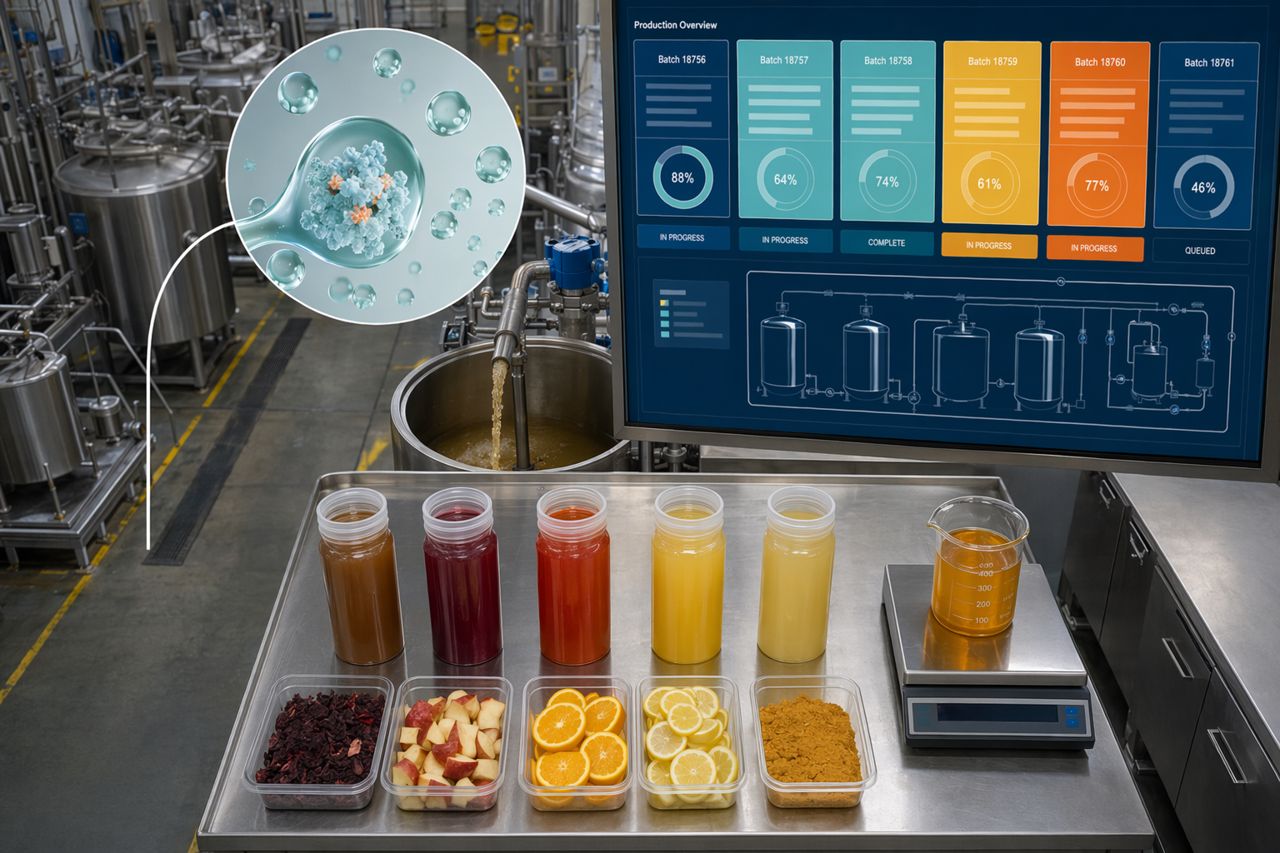
When a client brings in a juice blend, fruit tea, or functional beverage with pectin-driven haze or viscosity, the problem does not stay in the product development room. It shows up in tank turnover, filter loading, hold decisions, rework risk, and missed line windows.
Enzyone supplies pectinase for beverage co-packers that need practical enzyme support for multi-SKU production: clearer separation, more predictable filtration, cleaner documentation, and trial plans that respect plant schedules.
Request a quote using the on-site form
Where pectinase fits in a co-packer SOP
Pectinase belongs in the clarification SOP when pectin is creating one or more operational issues:
- Slow settling or poor separation after fruit addition
- Excess viscosity in juice blends, fruit bases, or botanical beverages
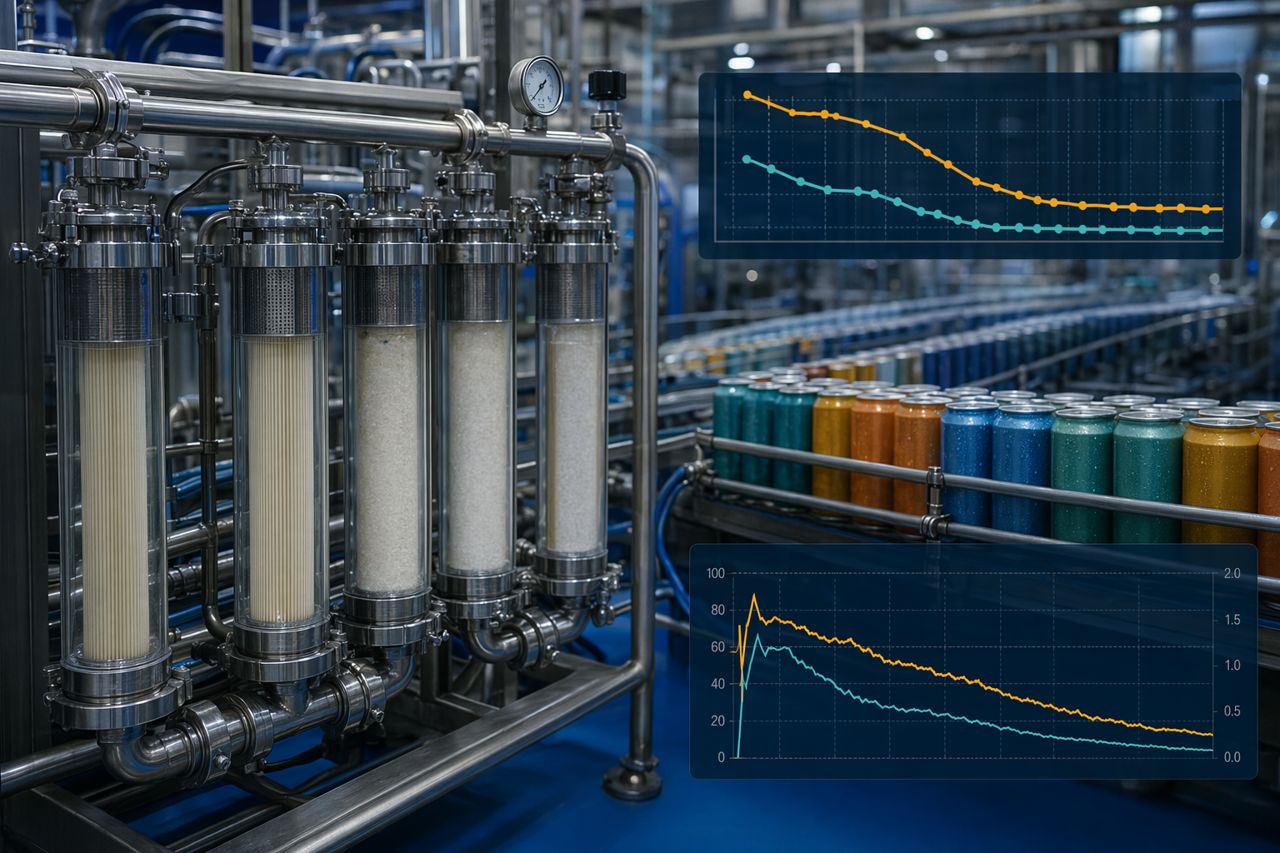
- Rapid filter plugging during clarification or polish filtration
- Persistent haze after thermal processing or cold hold
- Client specs that require improved brightness, clarity, or sediment control
- Seasonal fruit variability that changes tank behavior from load to load
For a co-packer, the goal is not enzyme novelty. The goal is to move a batch through the plant with fewer surprises.
What pectinase can improve
Pectinase helps break down pectin structures that hold water, suspend fine solids, and increase beverage viscosity. In a production setting, that can support:
Filtration relief
Lower pectin load can reduce the burden on downstream filters, helping your team protect filter life and avoid unplanned changeouts during high-pressure production windows.
Haze and sediment control
For fruit-forward teas, juice beverages, and functional drinks with plant-derived inputs, pectinase can help reduce haze drivers before the product reaches finishing, pasteurization, or packaging.
Viscosity management
When pectin thickens a beverage base, it can slow transfers, disrupt mixing, and complicate separation. Pectinase can help bring the matrix back into a more manageable processing range.
More predictable trials
A disciplined pectinase trial gives the plant manager, quality lead, and client a cleaner decision: keep the enzyme step, adjust the process, or reserve it for specific SKUs.
When to stock pectinase for seasonal programs
Many co-packers do not need pectinase on every beverage. They need it available when the SKU mix shifts.
Consider stocking pectinase when your production calendar includes:
- Apple, pear, berry, citrus, tropical, or stone fruit beverage programs
- Tea lines using fruit prep, puree, juice concentrate, or botanical extracts
- Functional beverages with fiber-containing plant inputs
- Cloudy-to-clear reformulation requests
- Client launches where appearance stability is a release concern
- Harvest-season variability that changes pulp, viscosity, or haze behavior
The best time to plan the enzyme step is before the first commercial batch is sitting in a tank waiting on filtration.
What we clarify before recommending a pectinase
Enzyone keeps the intake practical. We want to understand the plant reality before we recommend a product.
We typically ask about:
- Beverage type and fruit or botanical inputs
- Desired finished appearance: clear, bright, reduced haze, or controlled cloud
- Where the current bottleneck occurs: tank hold, separation, filtration, heat step, or finished-goods stability
- Process sequence and likely addition point
- Current filter train and where loading is occurring
- Client documentation requirements
- Whether the need is ongoing, seasonal, or tied to a launch window
This lets us recommend a pectinase path that is useful to production, not just technically correct on paper.
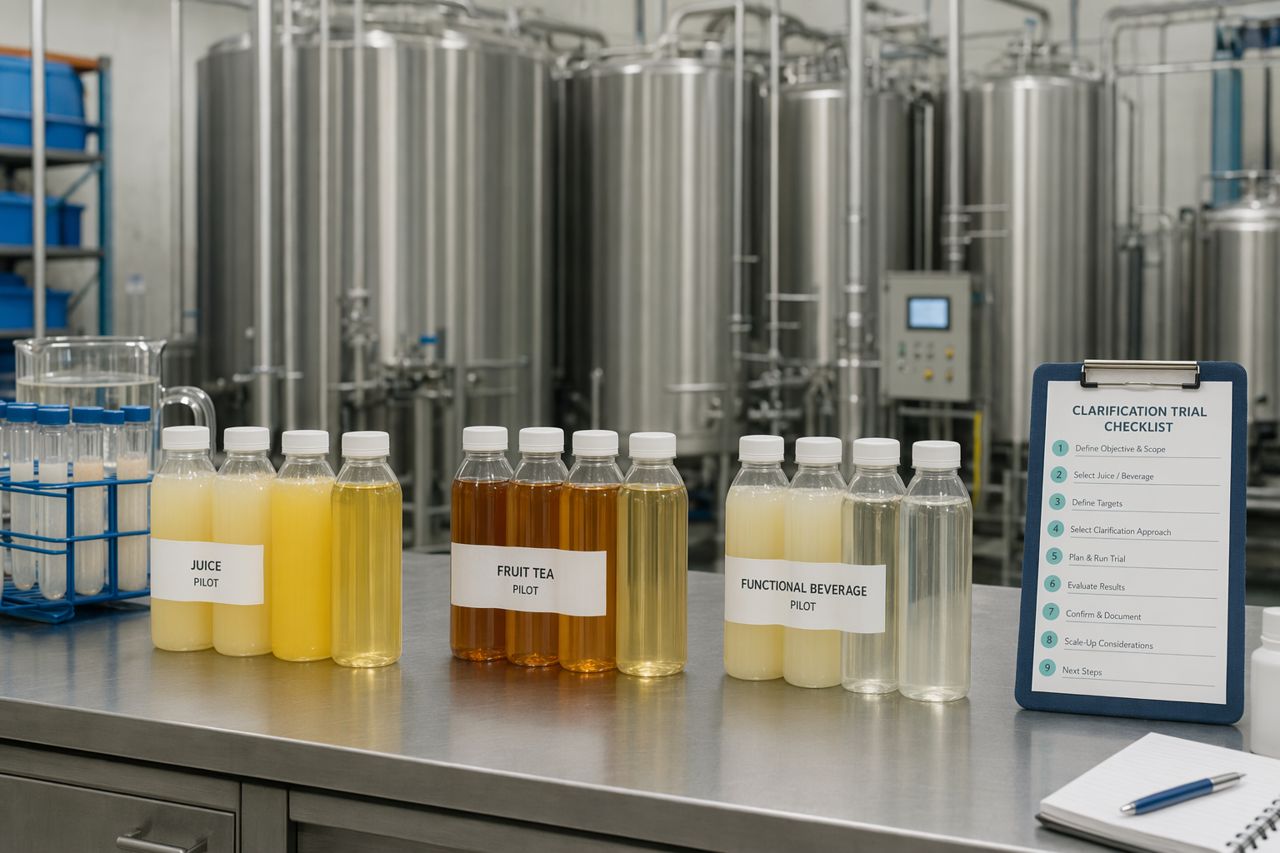
A trial structure that respects the plant
A beverage co-packer trial needs boundaries. It should answer the operational question without disrupting the full schedule.
A typical pectinase evaluation should define:
- The target improvement: clarity, viscosity, filtration rate, sediment reduction, or finished appearance
- The beverage matrix and any known variability in the client-supplied base
- The addition point that best fits the current batching sequence
- The approved contact window before separation, filtration, or heat treatment
- The comparison batch or retained control sample
- The documentation needed for client approval
- The go/no-go decision criteria for commercial use
Good enzyme work is disciplined. It should help the line move, not add confusion.
Co-packer-specific value
For contract beverage manufacturers, pectinase support is valuable when it improves execution across multiple clients and formats.
You gain:
- Faster diagnosis of pectin-related processing drag
- Better control over clarification and filtration outcomes
- A practical option for seasonal fruit variability
- Cleaner handoff between production, quality, and the client technical team
- Reduced risk of last-minute rework caused by haze, viscosity, or sediment
- A supplier conversation built around batching, tanks, filters, and release specs
Enzyone is an enzyme supplier for beverage co-packers that need credible, plant-floor support for real beverage programs.
Watch: pectinase in a co-packer clarification workflow
This short explainer shows where pectinase fits between batching, tank hold, clarification, filtration, and finished beverage release.
Common use cases
Fruit tea with haze and filter pressure
A tea client adds fruit concentrate and botanical extracts. The beverage looks acceptable in the tank but loads filters early and develops haze after processing. Pectinase may help reduce the pectin contribution before filtration.
Juice blend with slow separation
A juice blend carries fine suspended solids and does not settle predictably. Pectinase can support better breakdown of pectin structures so the clarification step behaves more consistently.
Functional drink with viscosity creep
A functional beverage includes plant-based inputs that increase viscosity and complicate transfer or filtration. Pectinase can help reduce pectin-driven thickness when pectin is part of the problem.
Seasonal fruit program with variable raw material
A co-packer runs the same client SKU across changing fruit lots. Pectinase can be held as an approved process tool for loads that show higher haze, pulp carryover, or filtration strain.
What pectinase will not fix
Pectinase is not a blanket correction for every beverage defect. It should not be used as a substitute for raw material control, sanitation discipline, proper filtration selection, or client spec alignment.
It may not resolve issues driven primarily by:
- Protein haze
- Microbial instability
- Mineral precipitation
- Emulsion failure
- Incompatible flavor systems
- Poorly controlled heat processing
That is why we start with the matrix, the bottleneck, and the release requirement before recommending an enzyme step.
Request a quote
If pectin haze, viscosity, or filtration drag is affecting a juice, tea, or functional beverage program, Enzyone can help you select a pectinase option and plan a production-minded trial.
Use the on-site request form and include the beverage type, current bottleneck, desired finished appearance, and whether the program is seasonal or ongoing.