Cold Fill, Hot Fill, Tunnel Pasteurization, and Clarity: Process Questions to Ask Before Scale-Up
For a contract beverage co-packer, scale-up is not just a larger batch. It is a collision between formulation, tanks, heat, filtration, line speed, changeover windows, and customer expectations.
A beverage that looks stable in a bench sample can behave differently when it moves through a jacketed tank, a long hold, a pasteurization step, a pressure leaf filter, or a high-speed filler. Enzyme selection matters because the wrong process fit can add viscosity, slow filtration, create haze surprises, or force operators into extra holds when the schedule is already tight.
Enzyone works as an enzyme supplier for beverage co-packers that need practical process support before the first production run. The goal is not novelty. The goal is predictable trials, cleaner handoffs, and fewer surprises at scale.
Start with the fill method, not the ingredient deck
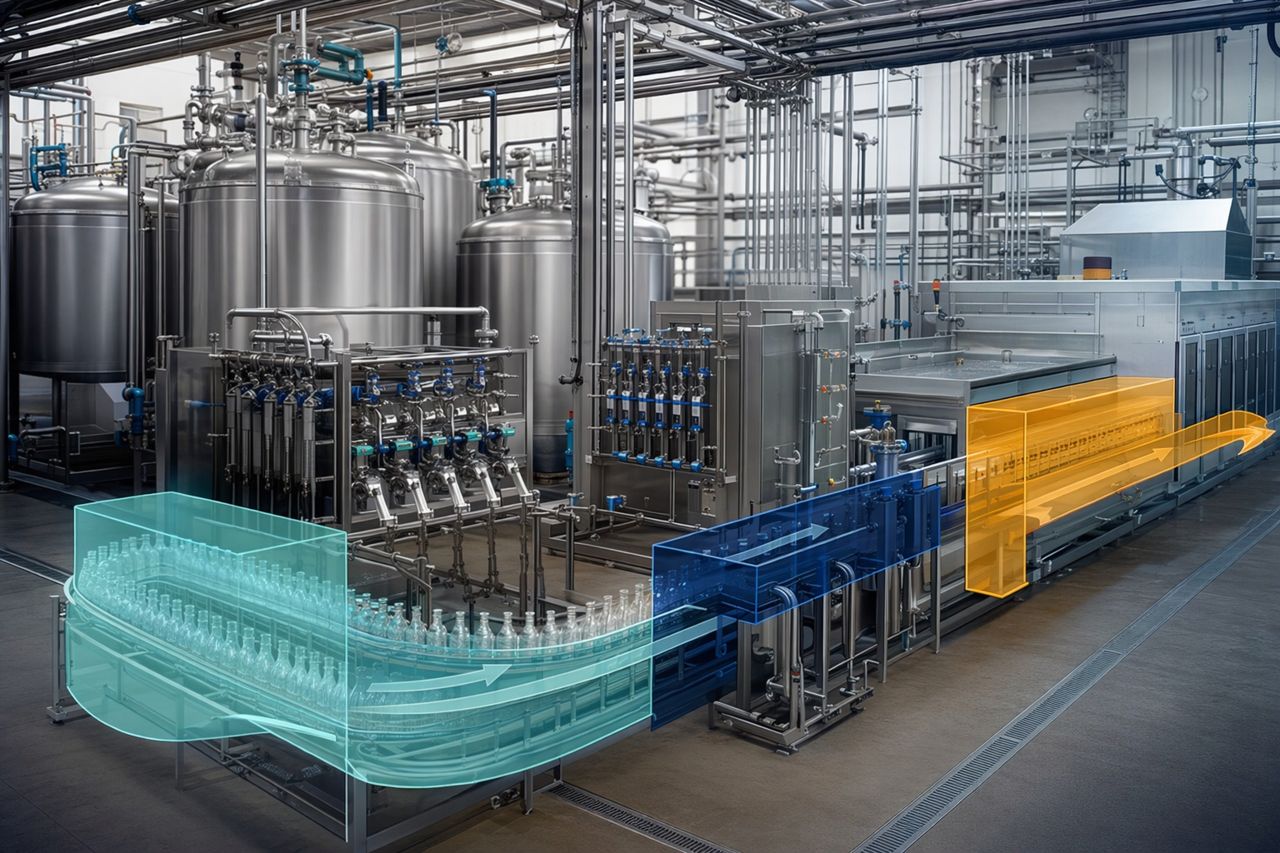
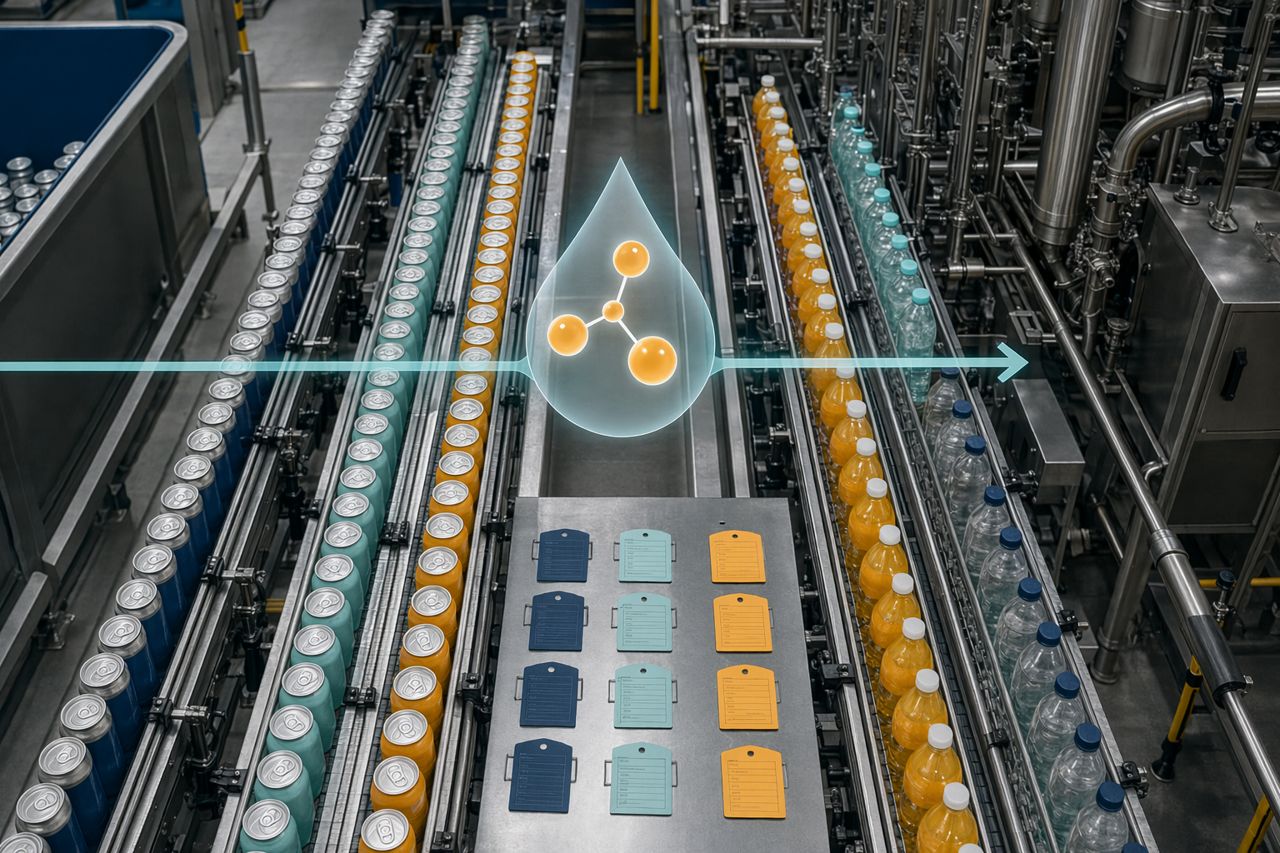
Before choosing an enzyme approach, define the thermal path and packaging sequence. Cold fill, hot fill, and tunnel pasteurization create different constraints for enzyme timing, inactivation expectations, haze control, and product handling.
Cold fill questions
Cold fill programs often expose process issues early because there is less thermal correction later in the line.
Ask:
- Will the enzyme step happen before blending, during batching, or in a dedicated pre-treatment stage?
- Is the product filtered before final blend, after final blend, or not filtered at all?
- What is the minimum hold time operators can protect during a tight changeover day?
- Does the product contain fruit, botanical, tea, grain, sweetener, gum, or fiber systems that may shift viscosity?
- Will microbial controls, preservative systems, and pH targets affect the process window?
- What does acceptable clarity mean: bright, lightly opalescent, consistent haze, or no visible sediment?
Cold fill does not forgive a loose trial plan. If the enzyme step is meant to reduce viscosity, improve extraction, support clarification, or relieve filtration, the plant needs a defined treatment window and a clear stop point.
Hot fill questions
Hot fill introduces heat exposure that can help terminate enzyme action, but it also changes color, aroma, particle behavior, and haze risk.
Ask:
- At what point does the product reach hot-fill temperature, and how long does it remain there?
- Is enzyme action expected before heating, during ramp-up, or in a separate treated ingredient stream?
- Will heat change pectin, starch, protein, tannin, or botanical solids behavior?
- Can the treated stream be verified before it enters final blend?
- Does the process allow a controlled hold, or is batching driven by filler demand?
- Will the hot product move through screens, strainers, or filters that are already near capacity?
For hot fill, the enzyme decision should be tied to actual tank behavior. If the product thickens during heat-up or throws haze after cooling, the issue may not be solved by adding more time on the filler side.
Tunnel pasteurization questions
Tunnel pasteurization adds a different kind of stress: packaged product sees a thermal profile after closure. That can reveal haze, flocculation, ring formation, sediment, or color instability that was not obvious in the bright tank.
Ask:
- Is the enzyme treatment completed before filling, or could residual process effects continue into package conditioning?
- Does the product contain juice solids, tea polyphenols, plant proteins, grains, or hydrocolloids that may respond to tunnel heat?
- Is the target package glass, can, PET, or another format with different heat transfer behavior?
- Are post-tunnel checks built into the trial plan at realistic timepoints?
- Are operators evaluating only immediate appearance, or also next-day and retained-sample behavior?
- Will a haze problem trigger rework, hold-and-release, customer deviation, or full disposal?
Tunnel validation should include more than a quick look at the first pallet. Build clarity and sediment checks into the batch record and the customer approval plan.
Clarity is a process outcome, not a lab adjective
In co-packing, clarity has to be translated into operating terms. A customer may say “clear,” but the plant has to know whether that means:
- Low turbidity through a defined package and lighting condition
- No visible haze after pasteurization
- No settled solids after storage
- No neck ring or bottom dusting
- Consistent appearance across lots
- Acceptable filter pressure profile during production
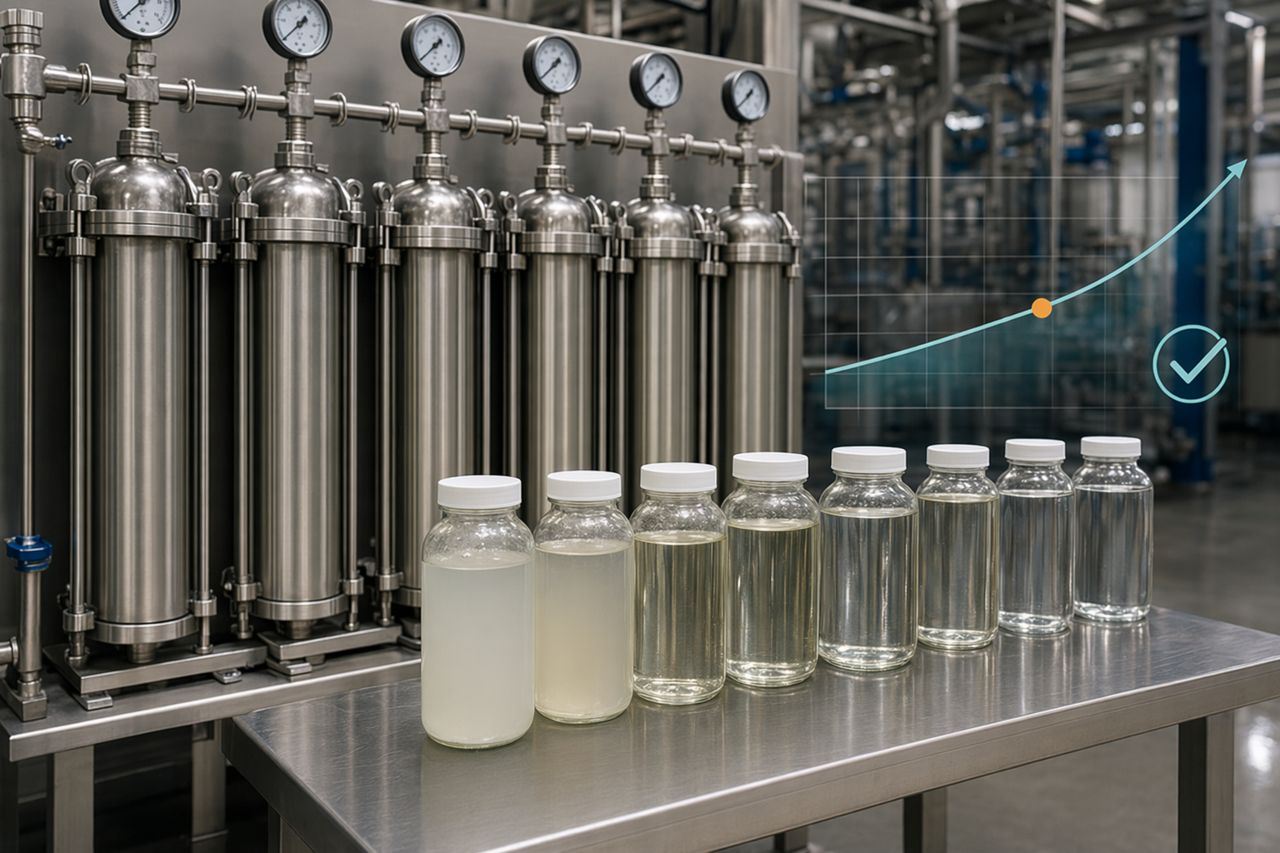
Enzymes can support clarity by targeting specific contributors such as pectin, starch, plant cell wall material, or other viscosity-building solids. But the enzyme is only one part of the system. pH, temperature, contact time, ingredient variability, shear, filtration media, and thermal steps all shape the result.
The practical question is not “Will this enzyme clarify?” The better question is: “Under this plant’s schedule, tanks, heat path, and filtration setup, can this enzyme produce a controllable clarity outcome?”
Viscosity management protects line speed
Viscosity problems do not stay in the batch room. They show up as slow transfer, pump strain, inconsistent fill weights, long filtration cycles, foaming, and missed changeover windows.
Before scale-up, ask:
- What is the viscosity target at batching temperature and fill temperature?
- Does viscosity climb during hold, heat-up, cooling, or storage?
- Is the formulation sensitive to fruit puree, botanical extract, starch-bearing ingredients, soluble fiber, or gums?
- Can the enzyme step reduce load before filtration or final blending?
- What is the decision point for extending treatment time versus releasing to the next step?
- Who owns the call: QA, batching lead, production manager, or customer technical contact?
A good scale-up plan gives operators a usable decision tree. If the tank is not ready, they need to know whether to hold, heat, filter, blend forward, or stop.
Filtration relief has to be measured at plant speed
A bench sample can look clean and still blind a filter. The plant needs to know what happens when the treated batch reaches production flow.
Build these filtration questions into the trial:
- What filtration step is the true bottleneck?
- Is the issue pressure rise, low throughput, premature media change, or poor clarity after filtration?
- Does enzyme treatment happen far enough upstream to reduce filter load?
- Are solids settling in the tank before filtration begins?
- Does the first third of the batch behave differently from the last third?
- Are filter observations captured in the run record, not just discussed after the shift?
For co-packers, filtration relief is valuable when it preserves schedule discipline. The win is not a prettier sample. The win is fewer mid-run interventions, more predictable throughput, and cleaner customer communication.
Trial design should match the real plant day
Scale-up trials often fail because they are designed like demonstrations instead of production events. A co-packer needs a plan that fits sanitation windows, labor, utilities, QA release, and customer attendance.
A disciplined enzyme trial should define:
- Ingredient lot and pre-treatment condition
- Tank used and actual batch size
- Addition point and mixing approach
- Target pH and operating temperature range
- Protected hold time and maximum hold time
- Heat step, if used
- Filtration sequence and media
- Fill method and package type
- Samples pulled at specific process points
- Visual checks after fill, after heat exposure, next day, and at retained-sample intervals
- Acceptance criteria agreed before the trial starts
The best trial plan removes improvisation. It gives batching, QA, maintenance, and the customer the same map.
Documentation matters when the customer asks for proof
Co-packers are often the technical bridge between brand owner expectations and plant reality. When enzyme processing is part of the solution, documentation has to be ready before production pressure builds.
Ask your enzyme supplier for:
- Product identity and intended process use
- Handling and storage guidance
- Lot traceability support
- Safety documentation
- Allergen and dietary-position documentation where applicable
- Country or market support where applicable
- Change notification expectations
- Practical processing notes for the planned beverage type
This is not paperwork for paperwork’s sake. It helps QA answer customer questions, supports batch review, and reduces delays before commercial launch.
The pre-scale-up meeting agenda
Before the first plant trial, put these questions on one page:
- What problem are we solving: haze, viscosity, filtration load, extraction, sediment, or consistency?
- What fill method will be used: cold fill, hot fill, or tunnel pasteurization?
- Where is the enzyme step located in the process map?
- What tank behavior do operators expect during hold, transfer, heat, and filtration?
- What does pass/fail look like at the filler and after storage?
- What data will be captured during the run?
- Who can approve a process adjustment during the trial?
- What documentation must be available before customer signoff?
If those answers are not clear, the trial is not ready.
How Enzyone supports beverage co-packers
Enzyone supplies enzyme solutions for co-packers that need process fit, not a generic catalog answer. We help teams connect enzyme selection to batching sequence, hold discipline, heat exposure, filtration pressure, haze targets, and documentation requirements.
Typical support includes:
- Enzyme selection aligned to the beverage matrix and fill method
- Trial planning for realistic plant conditions
- Process notes that operators can use during batching
- Scale-up questions for customer and QA alignment
- Documentation support for commercial readiness
- Quote support for multi-SKU and repeat-run programs
If your next beverage launch depends on clarity, filtration relief, viscosity control, or cleaner scale-up behavior, bring the process map early.
Request a quote from Enzyone and include the beverage type, fill method, batch size, filtration step, and the issue you need solved.