Tank Turnover Math for Beverage Co-Packers: Hidden Costs of Slow Settling and Filter Blinding
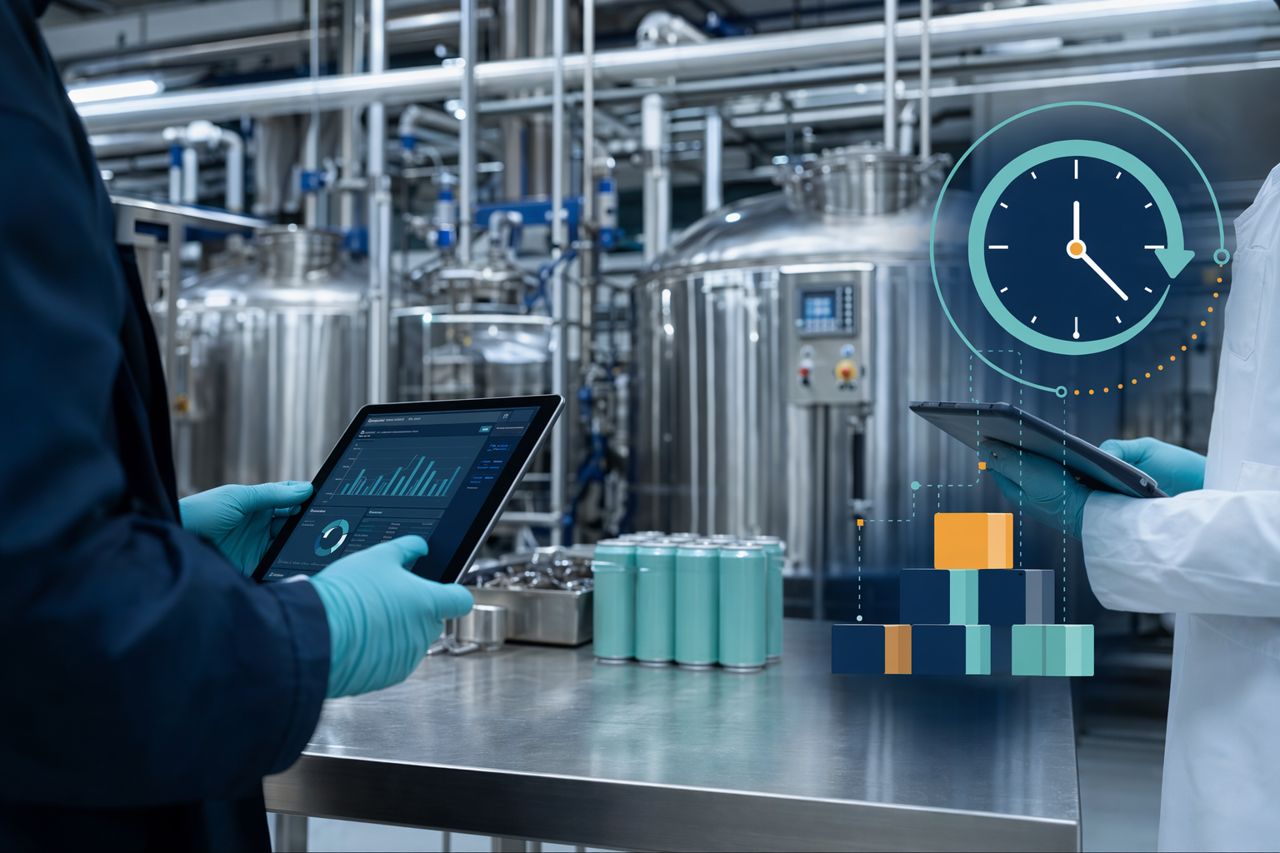
For a contract beverage co-packer, tank time is not just storage time. It is schedule currency.
A batch that settles slowly, runs heavy through the filter train, or returns haze after cooling can hold stainless hostage while the next SKU waits. The visible cost may look like extra filter media or another operator check. The actual cost is usually larger: missed changeover windows, squeezed CIP time, overtime, rescheduled packaging, and an awkward call to the brand customer.
Enzyone supplies enzyme solutions for beverage co-packers that need more predictable tank behavior across teas, juice blends, functional drinks, botanical extracts, concentrates, and multi-SKU production calendars. The goal is not a laboratory talking point. The goal is cleaner process flow: faster clarification, lower viscosity pressure, reduced filter blinding, and a batch that releases on schedule.
The co-packer problem: the tank is booked before the batch behaves
In a single-brand plant, a slow batch is a production issue. In a co-packing plant, it becomes a scheduling issue across multiple customers.
A typical week can stack:
- Brewed tea in the morning
- Juice blend after allergen or flavor changeover
- Functional beverage with gums, fibers, botanicals, or plant solids
- Low-acid or acidified product requiring tight documentation
- Concentrate dilution before a packaging run
- Trial batch squeezed between commercial campaigns
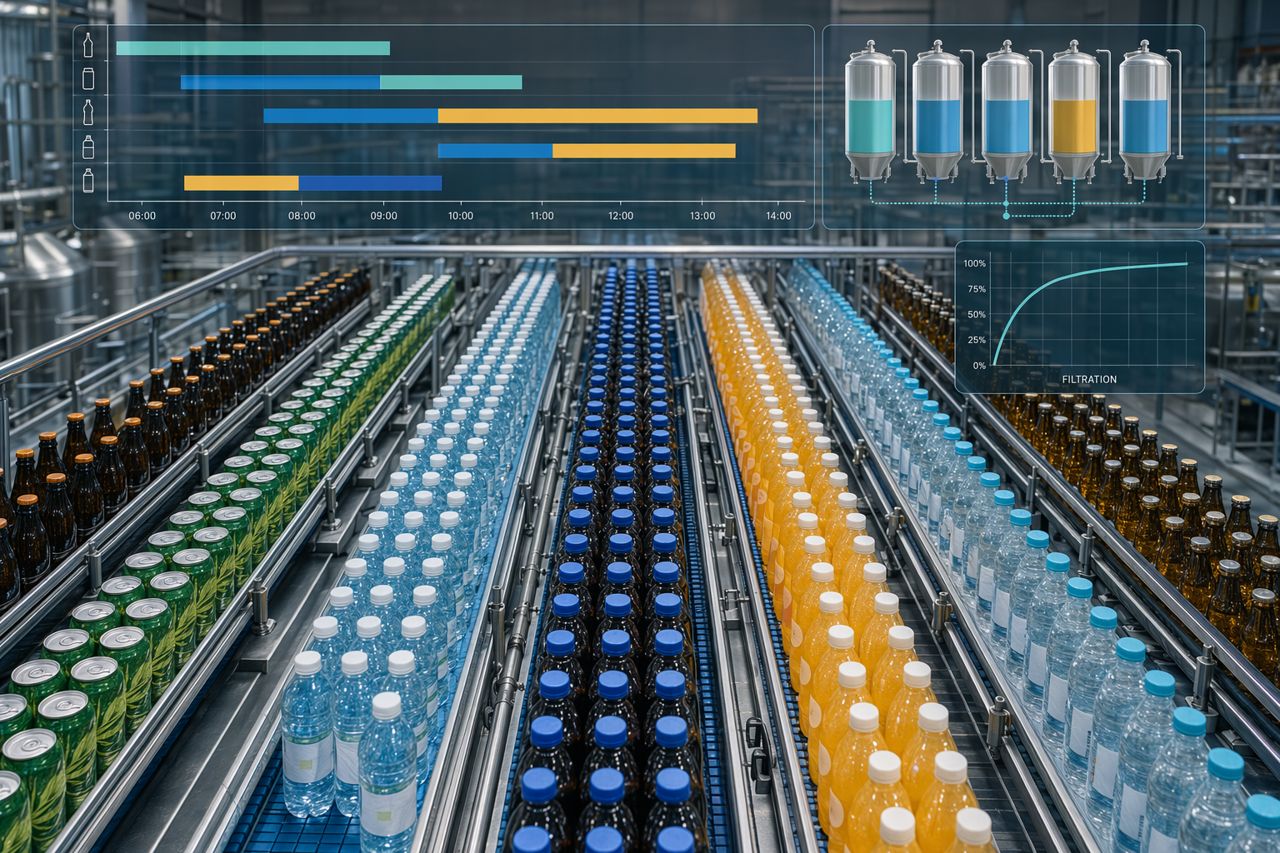
When one tank refuses to clear or pushes solids into the filter train, the schedule does not pause neatly. The downstream line may be staffed. Packaging materials may already be staged. The next batching team may be waiting for an empty vessel. CIP may get compressed, and compressed CIP is where discipline starts to erode.
That is why tank turnover math matters.
The hidden cost is not only filter media
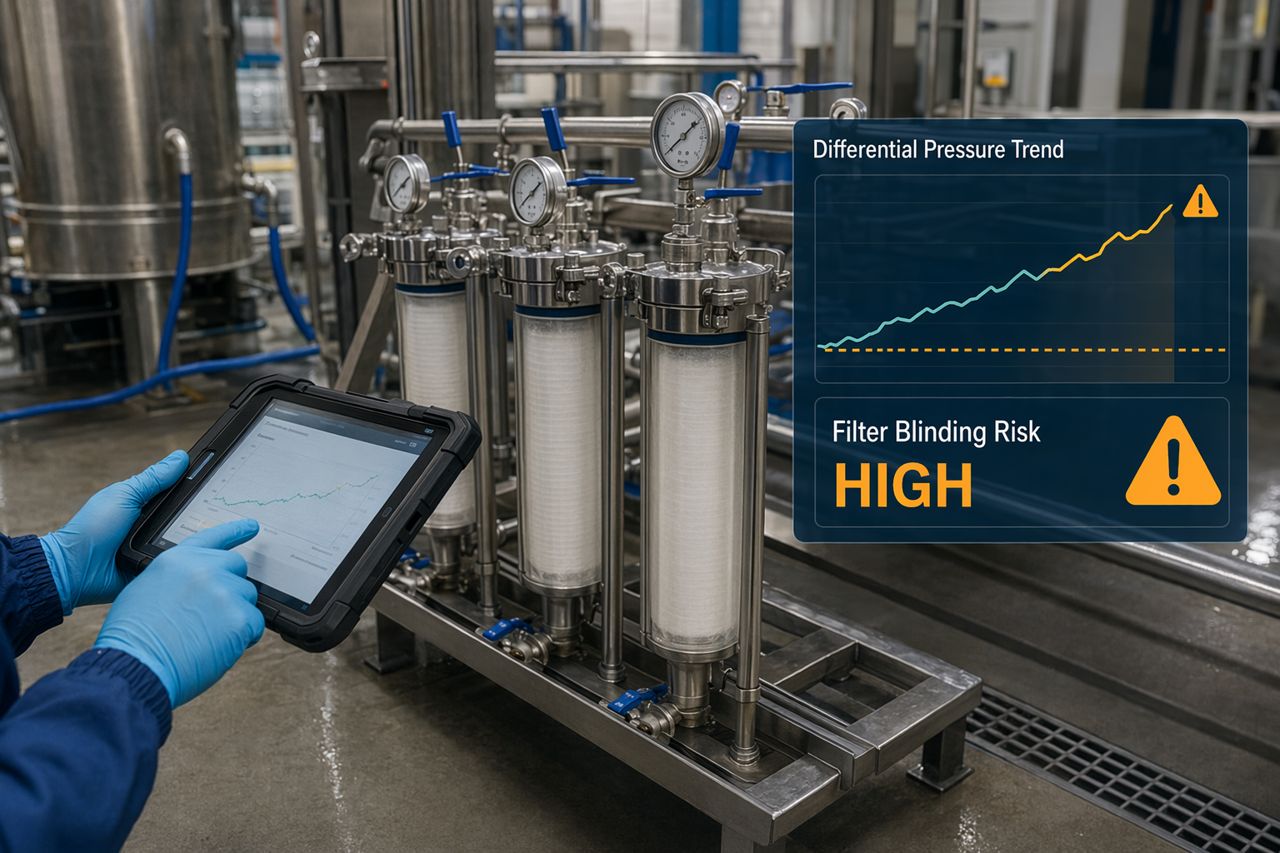
Filter blinding is easy to see. Differential pressure rises. Flow drops. Media consumption increases. Operators intervene. The batch takes longer.
But the larger cost often sits outside the filtration skid.
Cost categories plant managers should include
1. Tank occupancy overrun
Every extra hour in tank reduces available capacity for the next SKU.
2. Packaging line starvation
If the filler waits for clarified product, the plant pays for labor, utilities, and line time without saleable output.
3. Changeover compression
A batch that releases late can push cleaning, flavor changeover, allergen controls, and documentation into a narrower window.
4. Filter consumables and disposal
Blinded filters do not only cost purchase price. They add handling, disposal, and changeout time.
5. Quality hold time
Haze drift, unstable pulp behavior, or suspended solids can extend quality review and delay release.
6. Schedule credibility
For a co-packer, reliability is part of the product. Repeated late releases weaken customer confidence.
A practical tank turnover formula
You do not need a complex model to expose the cost. Start with a working estimate your operations and finance teams can agree on.
Slow batch cost =
  delayed tank hours × loaded tank-hour cost
+ delayed line hours × loaded packaging-line cost
+ added labor and overtime
+ added filter consumables
+ added waste and rework risk
+ customer service or schedule recovery cost
The key is to use plant-specific numbers. A small delay in a high-SKU week can cost more than a longer delay during slack capacity.
Example: when a clarification delay becomes a schedule problem
A botanical drink blend is expected to clear and filter in one shift. Instead, suspended solids remain active, viscosity stays high, and the first filter stage blinds early.
The plant adds hold time, swaps media, slows feed rate, and pushes packaging into the next shift. Now the next SKU loses its tank slot. CIP is moved later. The line is staffed but underfed. Quality has to review a product that behaved differently than the last run.
The filter media invoice may be the smallest number in the event.
Where enzyme programs create operational value
For beverage co-packers, enzyme selection should be tied to the processing behavior that hurts throughput.
Settling relief
Certain beverage matrices hold fine suspended material, clouding agents, fruit solids, starch residues, or plant cell wall fragments in ways that slow tank release. An enzyme program can help break down specific structure contributors so solids separate more predictably.
Filtration relief
Filter blinding often comes from a combination of fine particulates, colloidal material, soluble fibers, starch carryover, pectin-like structure, or gummy botanical load. The right enzyme approach can reduce the burden before the filter sees it.
Viscosity management
High viscosity does not only slow pumping. It can affect mixing, heat transfer, filter flux, and filling behavior. Enzyme treatment can help bring the batch into a more manageable processing window without forcing a recipe redesign.
Haze control
Some haze is intended. Some haze is an unstable process risk. Enzymes can help reduce unwanted haze drivers while preserving the sensory target defined by the brand owner.
Changeover confidence
In a multi-SKU plant, the best process aid is one the team can document, repeat, rinse, and schedule around. Enzyme programs should fit the plant’s batching order, hold times, temperature windows, filtration setup, and QA documentation expectations.
What to measure during an enzyme trial
A co-packer trial should be built around operations data, not novelty.
Track the metrics that decide whether the program earns a place in production:
- Time from enzyme addition to filtration-ready condition
- Tank hold time versus current baseline
- Filter run length before intervention
- Differential pressure trend across the filter train
- Flow rate stability during filtration
- Turbidity or haze trend at defined process checkpoints
- Viscosity or pumpability trend where relevant
- Finished-product sensory check against the customer standard
- CIP observations after the treated batch
- Operator interventions required
- Batch record clarity and repeatability
The trial should answer a plant-floor question: does this make the batch easier to release without creating a new problem?
Trial design for a co-packer schedule
A useful trial respects the reality of contract manufacturing.
Start with the worst repeatable pain point
Do not begin with the easiest product. Pick a SKU family that repeatedly causes filtration slowdown, settling delay, haze hold, or tank overrun.
Keep the trial bounded
Define the batch stage, dose point, mix time, temperature range, hold window, filtration target, and release criteria before the run starts.
Protect the customer specification
The enzyme program must support the brand owner’s finished-product target. That includes color, clarity or intended haze, mouthfeel, flavor profile, label requirements, and shelf-life expectations.
Document operator observations
Operators often see the win first: cleaner tank bottom behavior, fewer pressure spikes, easier transfers, more stable flow, or fewer filter changes. Capture those observations with timestamps.
Compare against recent production history
One trial is useful. A trial compared against the last three to five similar batches is better.
When enzyme treatment is worth evaluating
Consider an enzyme program if your plant sees any of the following:
- Clarification hold times drifting longer than the schedule allows
- Filter blinding that varies by fruit lot, tea extraction, botanical source, or fiber level
- Viscosity swings that slow pumping or filtration
- Haze instability that creates quality holds
- Tank bottoms that behave differently from run to run
- Repeated media changeouts on the same SKU family
- Packaging lines waiting for product release
- Trial products that look manageable in the lab but punish the plant
What Enzyone brings to the conversation
Enzyone is an enzyme supplier for beverage co-packers that need practical formulation support, trial discipline, and production-aware recommendations.
We focus on how the batch behaves in your plant:
- Where the enzyme should enter the process
- Which processing window is realistic
- What the operators should watch during the run
- How to compare treated and untreated batches
- How to document the process for repeatability
- How to reduce filtration and tank-turnover friction without disrupting the SKU calendar
No plant needs vague enzyme promises. A co-packer needs a cleaner run plan, a measurable trial, and fewer surprises at the filter skid.
Request a quote
If slow settling, haze drift, viscosity, or filter blinding is costing tank time in your beverage co-packing operation, send us the SKU type, current process flow, filtration setup, and the bottleneck you want to solve.